Congo health minister announces 3 Ebola treatment centers in Ituri amid ongoing outbreak
The Congolese health minister announced the opening of 3 treatment centers in the Ituri region in eastern Congo as he visited the region amid the ongoing Ebola outbreak. The hospitals are already under stress because of the patients, but Congo is preparing to have treatment centers at all three sites in order to be able to expand its capabilities. The World Health Organization (WHO) declared the Ebola disease outbreak a public health emergency of international concern after more than 300 suspected cases and 88 deaths in Congo and 2 in neighboring Uganda.
Although the outbreak is centered in Ituri, cases have been reported in the capital, Kinshasa, and in Goma, the largest city in eastern Congo. The WHO Regional Office for Africa said that a team of 35 experts from the WHO and the Congolese Ministry of Health had arrived in Bunia, the capital of Ituri province, along with 7 tons of emergency medical supplies and equipment. Ebola is highly contagious and can be contracted via bodily fluids such as vomit, blood, or semen.
The disease it causes is rare, but severe and often fatal. WHO’s emergency declaration is meant to spur donor agencies and countries into action. By WHO’s standards, it shows the event is serious, there is a risk of international spread and it requires a coordinated international response. Currently the Africa Centre for Disease Control and Prevention (Africa CDC) is on panic mode because people are dying, it does not have medicines and vaccine to support countries.
Africa CDC called for a meeting of all partners and hoped that it can have something in the next coming weeks.
Health authorities say the current outbreak is caused by the Bundibugyo virus, a rare variant of the Ebola disease that has no approved therapeutics or vaccines. Although more than 20 Ebola outbreaks have taken place in Congo and Uganda, this is only the third time that the Bundibugyo virus has been detected. The Bundibugyo virus was first detected in Uganda’s Bundibugyo district during a 2007-2008 outbreak that infected 149 people and killed 37.
The second time was in 2012, in an outbreak in Isiro, Congo, where 57 cases and 29 deaths were reported. In April 2024, WHO said there was a risk of H5N1 bird flu virus outbreak spreading to cows in other countries beyond the United States through migratory birds. United States officials were seeking to verify the safety of milk and meat after confirming the H5N1 virus in 34 dairy cattle herds in 9 states, and in 1 person in Texas.
With the virus carried around the world by migratory birds, certainly there was a risk for cows in other countries to be getting infected. The United Nations (UN) agency deemed the overall public health risk posed by the virus to be low but urged vigilance. The UN had received regular updates and praised the United States transparency on the outbreak so far to share the bird flu virus genetic sequence early.
The collaboration with United States Centers for Disease Control and Prevention (CDC) and the information the UN had received so far enabled the UN to monitor the situation and to update the preparedness measures.
In March 2024, cows on a Texas dairy farm began showing symptoms of a mysterious illness known to be H5N1 bird flu. Their symptoms were nondescript, but their milk production dramatically dropped and turned thick and creamy yellow. Cats on the farm that had consumed some of the raw milk from the sick cows also became ill. While the cows would go on to largely recover, the cats were not so lucky.
The cats developed depressed mental states, stiff body movements, loss of coordination, circling, copious discharge from their eyes and noses, and blindness. Over half of the farm’s 24 or so cats died from the bird flu. Researchers in Iowa, Texas, and Kansas found that the cats had H5N1 not just in their lungs but also in their brains, hearts, and eyes.
The findings were similar to those seen in cats that were experimentally infected with H5N1, aka highly pathogenic avian influenza virus (HPAI). But, on the Texas dairy farm, they presented an ominous warning of the potential for transmission of this dangerous and evolving virus. The contaminated milk was the most likely source of the cat’s fatal infections.
Although it could not be entirely ruled out that the cats got sick from eating infected wild birds, the milk they drank from the sick cows was brimming with virus particles, and genetic data showed almost exact matches between the cows, their milk, and the cats.
Therefore, the findings suggested cross-species mammal-to-mammal transmission of HPAI H5N1 bird flu virus and raise new concerns regarding the potential for virus spread within mammal populations. The early outbreak data from the Texas farm suggested the bird flu virus is getting better and better at jumping to mammals, and data from elsewhere showed the virus was spreading widely in its newest host. The United States Department of Agriculture (USDA) confirmed the presence of H5N1 in a dairy herd in Texas, marking the first time H5N1 had ever been known to cross over to cows.
Since then, the USDA had tallied infections in at least 34 herds in nine states: Texas, Kansas, Michigan, New Mexico, Idaho, Ohio, South Dakota, North Carolina, and Colorado. The Food and Drug Administration (FDA), meanwhile, had detected genetic traces of H5N1 bird flu in roughly 20 percent of commercial milk samples. While commercial milk was still considered safe, pasteurization was expected to destroy the virus and early testing by the FDA and other federal scientists confirmed that expectation, the finding suggested yet wider spread of the virus among the country’s milk-producing cows.
In January 2024, it was still a pandemic causing far too many reinfections, hospitalizations, deaths, and long covid when tools exist to prevent them. While the United States remains in a federal public-health emergency free zone, a leader at the WHO voiced concerns about where the world stood at this stage in the pandemic. Covid was still a global health threat.
Cases and hospitalizations for covid had been on the rise for months.
Hospitals in many countries were burdened and overwhelmed from covid and other pathogens, and deaths were on the rise. The world had gone through something traumatic, governments and individuals could not give in to complacency. Too many thought covid was not something to worry about, that they needed a new variant with a Greek letter to take this virus seriously.
The message came as JN.1, a virus variant in the Pirola clan, was the most dominant strain in the United States. Deaths and hospitalizations from covid were also on the rise across United States and other parts of the world. People died alone and people were dying. Hundreds of thousands of people in hospital were fighting for their lives. Those suffering from long covid struggling each and every day.
The WHO was worried about the state of the global outbreak heading into the fifth year since the virus’ eruption. However, the JN.1 variant was not believed to cause a more serious infection than other strains. JN.1 made up 44% of cases and was the most widely circulating variant, increasing from 21.3% and overtaking the HV.1 strain. The CDC also reported a 10% increase in deaths caused by the JN.1 variant.
This condition developed for some people infected by the virus, often leading to months of debilitating symptoms.
The WHO called on governments to remember the tragedies of the early days of the pandemic The variant JN.1 was becoming dominant and was marked as a variant of interest by the WHO. The covid pandemic was not normal. In December 2023, scientists warned a virus dubbed the “Zombie Deer Disease” could potentially spread to humans after Yellowstone National Park saw its first in November 2023.
Zombie Deer Disease, or Chronic Wasting Disease (CWD), was caused by prions that leave animals drooling, lethargic, and emaciated, stumbling with a telltale blank stare. The prions, abnormal transmissible pathogens, caused changes in the hosts’ brains and nervous systems. CWD could spread through deer, elk, moose, caribou, and reindeer and was fatal with no known treatments or vaccines.
Cases had been detected across dozens of states, including Ohio, where white-tailed deer tested positive for CWD in Marion and Wyandot counties. CWD could be found all across Wyoming. Park officials estimated 10-15% of the mule deer that migrate to the southeastern section of Yellowstone in the summer had CWD. Despite the widespread nature of CWD, the long-term effects on deer, elk, and moose were unknown.
CWD also transmitted among other animals, leaving them drooling, lethargic, stumbling, and with a blank stare.
CWD had been found in more than 800 samples of deer, elk, and moose across the state of Wyoming. Infected animals got this abnormal protein and it caused them, over a year or two, to develop these holes in their brain so they could not feed themselves, eventually they would die. In 2022, officials confirmed cases in 13 Ohio counties. A deer carcass in Yellowstone National Park tested positive for the highly contagious disease, causing some scientists to sound the alarm about possible risks to humans.
The Bovine Spongiform Encephalopathy (BSE) outbreak in Britain provided an example of how, overnight, things could get crazy when a spillover event happened from, say, livestock to people. There was a potential of something similar occurring. It was not definitely going to happen, but it was important for people to be prepared. It was worrying that there was no known way to eradicate it, neither from the animals it infected nor the environment it contaminated.
No known case of CWD in humans had ever been recorded. CWD could pose a risk to certain non-human primates, like monkeys, that ate meat from infected animals. These studies raised concerns that there might also be a risk to people. Since 1997, the WHO had recommended that it was important to keep the agents of all known prion diseases from entering the human food chain.
CWD should be viewed against a backdrop of dangerous emerging zoonotic pathogens.
But experts had now warned the disease could soon become a slow-moving disaster and had urged governments across the globe to prepare for the possibility of CWD spreading to humans in the future. These pathogens were said to be moving back and forth across species including humans across the entire globe. As for humans, any potential outbreaks could occur due to settlements and agricultural operations delving deeper into environments where animals carrying CWD.
This would particularly become a concern in the United States as hunting season got underway. As a result, the CDC recommended that harvested game animals be tested for CWD, while meat from cervids that appear ill should not be consumed. The science of what was needed to help slow the spread of CWD was clear, and had been known for a long time. There was a lot at stake for the Yellowstone ecosystem, and a lot at stake for all Americans who enjoyed having healthy wildlife on the landscape.
Wildlife predators such as wolves, cougars, and bears were able to detect sick animals long before humans do. They tended to prey on them and removed the animals with the CWD from the landscape, and had so far been immune to the disease. However, as per some studies, monkeys faced the threat of getting infected by CWD if they ate infected animal meat or came in contact with the bodily fluids or brains of infected animals.
CWD was a fatal and contagious disease illness which affected cervids, which was a group of animals that includes elk, deer, moose, reindeer, and caribou.
CWD was caused by a malformed protein, known as prion, which got accumulated in the tissues and the brain and caused behavioral and physiological changes, emaciation, and ultimately death. CWD got transmitted by direct animal-to-animal contact and also indirectly by getting in contact with infectious particles which were present in soil, vegetation, or faeces. Animals could also get an infection if their pasture or feed was contaminated by the prions which were carrying it.
It might take more than a year for the development of symptoms in the deer. It generally started with the deer losing weight drastically, stumbling around, and eventually losing all the energy. At present, there was no cure or vaccine with CWD. In October 2020, researchers at the University of Southern California (USC) had found that covid symptoms often manifested in patients in a particular order.
Using World Health Organization (WHO) data from more than 55,000 patients in China, the research team determined that fever was most frequently the first symptom of covid. This was followed by a cough, then aches and pains in the throat, muscles, and head, then nausea and/or vomiting. Diarrhea was the last symptom to appear. Influenza initiated with cough, whereas covid-related diseases initiated with fever. However, covid differs from SARS and MERS in the order of gastrointestinal symptoms.
Fever should be used to screen for entry into facilities as regions began to reopen after the outbreak of Spring 2020.
While these findings might be useful in helping frontline healthcare workers distinguished new cases of covid from the common cold of flu, other experts had pointed out that this order of symptoms would not be the same for each patient. Another potential flaw that had been flagged by critics of the study was the issue of recall bias as patients struggle to accurately remember which of their symptoms they experienced first. It was not going to be universal.
A number of people did not have a fever. This study might provide some insight into the way in which covid symptoms presented themselves in patients, but the consensus among the scientific community seems to lean towards the idea that equally close attention should be paid to other symptoms including shortness of breath, loss of taste or smell, and fatigue. A survey revealed just 59% of American adults plan to get the flu vaccine.
Those numbers were concerning since the flu season and ongoing covid pandemic were overlapping, making it more important than ever for people to get vaccinated. It was more important than ever to get a flu. Flu vaccinations would reduce the burden on the overall health care system by preventing people from having to be tested, going to the emergency room, or using hospital beds.
One of the best tools was vaccines.
In September 2020, the world reached a somber milestone in the covid pandemic. More than a million people worldwide had died from covid. The global death toll was 1,000,555. The United States accounted for more than 20% of global deaths and had the highest fatality count, having recorded 205,131 deaths. The first covid-related death recorded was in the Chinese city of Wuhan.
Worldwide, half a million deaths were reported more than 24 weeks later. It took just a little over 13 weeks to double the figure. The United States, Brazil, India, and Mexico accounted for more than 50% of the deaths worldwide. In the United States, covid cases continued to climb, with 21 states reporting more new cases. Only 10 states were showing downward trends in new cases and 19 states were holding steady.
But in many states, it was not only that the number of infections kept on going up.
-
 PEPfAR: Distribution of US-backed HIV medications to poorest nations in flux after Trump order slowing foreign aid
PEPfAR: During a 90-day foreign aid freeze, Secretary of State Marco Rubio issued exemptions for life-saving humanitarian assistance, but the fate of HIV
PEPfAR: Distribution of US-backed HIV medications to poorest nations in flux after Trump order slowing foreign aid
PEPfAR: During a 90-day foreign aid freeze, Secretary of State Marco Rubio issued exemptions for life-saving humanitarian assistance, but the fate of HIV
-
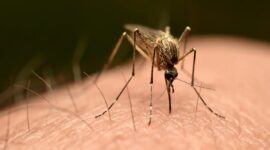 Tampa Bay Dengue Fever Outbreak
Dangerous mosquito-borne virus spreads in one state as officials warn of rising cases. Florida mosquito-control agencies are stepping up surveillance, inspections and spraying,
Tampa Bay Dengue Fever Outbreak
Dangerous mosquito-borne virus spreads in one state as officials warn of rising cases. Florida mosquito-control agencies are stepping up surveillance, inspections and spraying,

