Covid-19 could kill 2,900 Americans a day
By the end of December, Covid-19 could kill more than 2,900 people a day in the United States. The last time Americans faced a fall and winter like this, World War I was just ending. A months-long pandemic exploded in the fall of 1918, killing 195,000 Americans in just the month of October.
Fast-forward 102 years, and the United States is on track for another devastating fall and winter. But it does not have to be that way. Colder weather, the flu season, reopened schools, and pandemic fatigue are a recipe for the most difficult months yet in the fight against Covid-19.
When more people gather indoors, there is less opportunity for viral particles to disperse, increasing the risk of Covid-19 spread. And there is good enough data to say that aerosol transmission of Covid-19 does occur. Respiratory aerosols are smaller than respiratory droplets and can be emitted when a person talks or breathes.
Aerosol means the droplets do not drop immediately.
They hang around for a period of time. This becomes very relevant when you are indoors and there is poor ventilation. The flu season generally starts in October. And its collision this year with the Covid-19 pandemic could deal a significant blow to the health care system and your own body.
You can certainly get both the flu and Covid-19 at the same time, which could be catastrophic to your immune system. In fact, having one of the two viruses can actually make you more vulnerable to getting infected with the other. Your defenses go down, and it makes you vulnerable to getting a second infection on top of that.
Getting a flu shot this year may be more important than ever. Many schools that brought students back to classrooms are suffering with outbreaks that could keep growing in the coming months. And once students and teachers get infected, they can unknowingly spread the virus in their communities.
Athens-Clarke County, home to the University of Georgia, managed to keep its Covid-19 numbers relatively low throughout the summer but suffered a dramatic spike in cases in the community.
Clearly, it is the return to campus of large numbers of students who are not there through the summertime. Some universities have already canceled spring break due to Covid-19 concerns. Those include Syracuse University, Georgia Tech, and Ohio State.
We are nowhere near herd immunity, and a vaccine probably will not be publicly available until the middle of 2021. Until then, the daily United States death toll is expected to steadily climb through the end of this year, reaching more than 2,900 United States deaths a day by December 27th. There are two main reasons for that projected surge.
First, as case counts have come down in some states, we tend to see that people become less careful, they tend to have more contact. But then the most important effect is the seasonality of the virus, that people go indoors, transmission happens more. That is why the huge surge that is expected to take off in October and accelerate in November in December.
Just because the pandemic is still here does not mean you cannot enjoy the fall and winter.
Everyone should limit their interactions at indoor venues. If you do have gatherings, invest in ways to keep them outdoors, perhaps with a fire pit, a warm coat, or a heat lamp. Wearing a face mask with two or more breathable layers is one of the cheapest, easiest, and most effective ways of reining in the virus and getting life closer to normal, faster.
Masks can prevent you from exhaling viral particles without your knowledge if you are a non-symptomatic carrier of the virus. It could also help save tens of thousands of lives. If 95% of Americans consistently wore masks in public, 100,000 United States lives could be saved by January 1st.
And that projected daily death toll of almost 3,000 in late December would drop to about 1,000 if virtually all Americans wore face masks in public. If you visit friends or family, do it wisely. We know by now that much of Covid-19’s spread is actually driven not by formal settings with strangers but by informal gatherings of family and friends.
Some individuals may be letting down their guard with loved ones.
If you must travel for the holidays, cut out risky behavior before your trip, such as dining at restaurants indoors or getting in close contact with people you do not live with. It is also a good idea to get tested before seeing loved ones. But do not get a false sense of security with negative test results.
Sometimes there are false negatives, which means you have the disease but the test does not detect it. Because it is possible to get a negative result even when you have Covid-19, it is important to be careful even when you receive a negative result. And even if a negative test result is correct, you may have been infected since that test was taken.
This season does not have to be doom and gloom. In fact, the Centers for Disease Control and Prevention (CDC) offers a long list of ways to celebrate Halloween and Thanksgiving safely. Instead of Halloween parties or trick-or-treating, the CDC suggests carving pumpkins with your family or with friends and neighbors, at a safe distance.
You can also have virtual costume contests or a Halloween scavenger hunt where children are given lists of Halloween-themed things to look for while they walk outdoors from house to house admiring Halloween decorations at a distance.
For Thanksgiving, you can celebrate by having a virtual dinner with friends or family from afar and sharing your favorite Thanksgiving recipe. You can also help loved ones who are at high risk for Covid-19 or those who are feeling isolated by preparing traditional Thanksgiving dishes and delivering them in a way that does not involve contact with others.
-
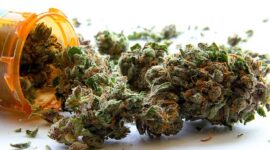 Mind-altering THC chemical in cannabis could help prevent and treat deadly Covid complications
Cannabis could be used to help treat potentially deadly complications with covid, a growing body of research suggests. Researchers at the University of
-
 What is Visual Impairment?
Visual impairment is the term used to describe a loss of sight that cannot be corrected using glasses or contact lenses. Registered partially

